Investors can buy NSE unlisted shares through Supremus Angel by completing KYC, confirming availability and pricing, transferring funds, and receiving shares via off-market demat transfer.

National Stock Exchange of India Limited (NSE) is a Mumbai-based leading stock exchange
established in 1992 and recognized as India’s largest financial market infrastructure institution.
NSE provides trading, clearing, and settlement services across equities,
derivatives, currencies,
and debt instruments.
NSE Pre-IPO shares are among the most sought-after unlisted shares in India,
backed by strong
profitability and long-term growth potential.
| Name | Designation | LinkedIn Profile |
|---|---|---|
| Shri Ashishkumar Chauhan | CMD | in |
| G.C Chaturvedi | Chairman | — |
Investors can buy NSE unlisted shares through Supremus Angel by completing KYC, confirming availability and pricing, transferring funds, and receiving shares via off-market demat transfer.
No. National Stock Exchange (NSE) shares are not publicly listed yet and are classified as Pre-IPO/unlisted shares traded via the secondary market. NSE operates India’s largest equity and derivatives exchange infrastructure.
NSE operates India’s largest electronic stock exchange, offering equity, derivatives, currency, debt, and index trading infrastructure.
NSE unlisted shares typically trade in the range of ₹1,800 - ₹2,100 per share. NSE is India’s largest stock exchange and operates in equity, derivatives, and bond trading infrastructure.
There is no statutory lock-in for NSE unlisted shares bought through the secondary unlisted market. However, transfer restrictions may apply after DRHP filing or IPO announcement. SEBI lock-ins apply post-listing to pre-IPO shareholders
Sellers submit a Delivery Instruction Slip (DIS) to authorise off-market transfer of NSE shares from their demat account to the buyer.
The minimum ticket size depends on current NSE unlisted share price, lot size availability, and seller terms, communicated by Supremus Angel before execution.
Yes. Buying NSE unlisted shares through demat-based off-market transactions is legal and compliant under Indian regulations.
If sold within 24 months, gains are treated as short-term capital gains and taxed as per the investor’s income tax slab.
If held for more than 24 months, gains qualify as long-term capital gains, taxed at 20% with indexation benefits.
After listing, NSE shares follow listed equity taxation rules, and the holding period is counted from the IPO listing date.
Investors can verify credit via NSDL or CDSL demat statements, where NSE appears under unlisted securities.
NSE unlisted shares are typically credited within 2-4 working days after transaction settlement.
Prices are tracked through private market trades, broker quotations, and Supremus Angel’s unlisted share price updates.
Risks include IPO timeline uncertainty, regulatory developments, liquidity constraints, and market-linked valuation fluctuations.
Supremus Angel provides verified sellers, transparent pricing, demat-only settlement, and structured transaction execution.
Valuation is based on profitability, cash flows, market dominance, trading volumes, regulatory environment, and peer exchange benchmarks.
Shares are sourced from institutions, long-term shareholders, ESOP holders, and private market sellers, subject to due diligence.
Rising retail participation, derivatives volumes, and financialisation of savings support long-term growth for NSE.
The process includes KYC verification, price confirmation, fund transfer, DIS execution, and demat credit.
Most NSE unlisted share transactions are completed within 3-5 working days, depending on settlement timelines.
Required documents include PAN, Aadhaar, an active demat account, and completed KYC formalities
Investors seeking exposure to India’s core capital-market infrastructure, with long-term conviction, may evaluate NSE Pre-IPO shares.

Effective March 24, NSE simplified unlisted share transfers via DIS, reducing timelines from months to just 3–5 days, improving liquidity.
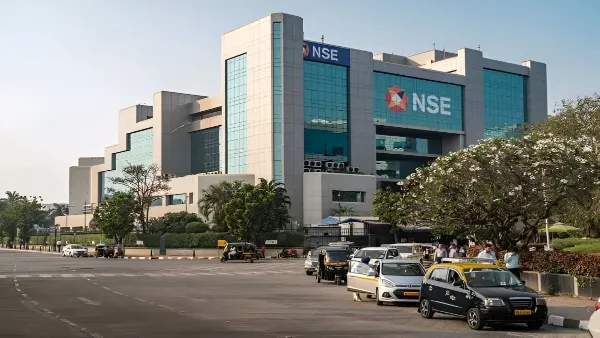
NSE plans to transform its BKC headquarters into a high-capacity data center with over 4,000 racks to support trading demand.
