
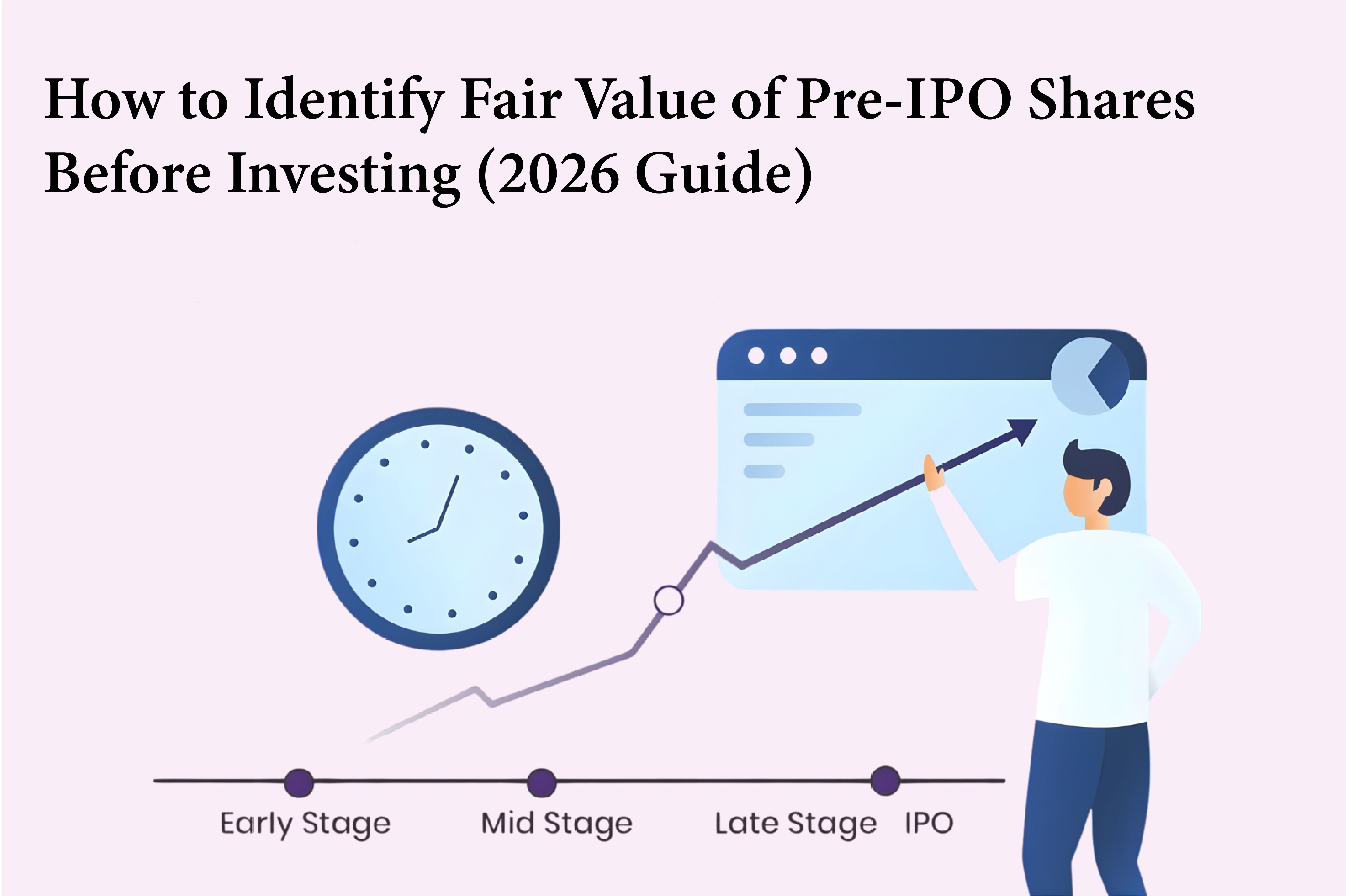
Determining the fair value of pre-IPO shares essentially means assessing whether the price tag on shares of a privately held company is justified. This process requires a close examination of the company's financial health, its potential for future expansion, and a comparison to other businesses in the same sector.
Because these shares aren't traded on public exchanges, there's no easy way to find a current price. Investors must sift through financial data, employ various valuation methods, and conduct thorough analyses to determine if a pre-IPO investment is fairly priced. A careful approach can help avoid financial problems and make it easier to invest wisely in private companies.
Before a company goes public, determining the true value of its shares is a complex task. Essentially, it's the anticipated value of a company's stock prior to its initial public offering.
This figure attempts to capture what a savvy investor would consider a reasonable price, taking into account several factors:
Unlike stocks that are traded on the open market, where prices fluctuate constantly, pre-IPO shares get their price tags from a different process:
Because of these differences, accurately estimating fair value is a crucial step for anyone considering an investment.
1. Growth and dependability of income
2. Profitability and Margins
3. Cash Flow and Burn Rate
4. Industry and Market Potential
5. Comparable Company Valuation
6. Latest Funding Round Valuation
7. Shareholding and Investor Quality
8. IPO Potential and Timeline
Step:1 Examine the company's financial performance.
Step 2: Compare with Similar Companies
Step 3: Evaluate Valuation Multiples
Step 4: Growth Versus Valuation
When a company's future looks bright, its valuation might reflect that optimism. On the flip side, a high price with little growth is a red flag. The sweet spot lies in finding the right equilibrium between expected expansion and the cost.
Step 5: Review Funding History
Look at the current price in relation to the most recent funding round. Determine if the valuation increase makes sense. Be cautious of significant price jumps that don't correlate with improved performance.
Step 6: Liquidity Discount
Shares offered before an initial public offering often carry a price reduction. The limited liquidity of these assets, along with the lack of clear pricing and the long holding periods they require, are important factors. If this discount isn't considered, the actual value could be overestimated.
Step 7: Assessing IPO Valuation
Examine the anticipated IPO price range, the prevailing market climate, and the overall mood within the sector. This analysis aims to offer a glimpse into the stock's future performance.
| Factor | What to Check | Good Sign | Red Flag |
| Revenue Growth | YoY growth consistency | Stable growth | Irregular spikes |
| Profitability | Margin trends | Improving margins | Continuous losses |
| Cash Flow | Burn rate | Controlled | High burn |
| Valuation | Peer comparison | Reasonable | Overpriced |
| Funding History | Recent rounds | Justified increase | Sharp unexplained jump |
| Industry | Growth potential | Expanding sector | Declining sector |
| Liquidity | Exit options | Available | Limited buyers |
| Governance | Transparency | Strong | Weak |
| Aspect | Fair Value | Market Price |
| Basis | Fundamental analysis | Demand & supply |
| Stability | Relatively stable | Can fluctuate |
| Transparency | Analytical | Often opaque |
| Reliability | Higher (if analysed correctly) | Variable |
Key takeaway:
Market price does not always reflect fair value in private markets.
Consider it fairly valued if:
Consider it overvalued if:
Consider It Undervalued If:
Key Insight
Fair value isn't a static figure. It's more of a spectrum, shaped by several factors:
Investors should focus on a sensible range of valuations, rather than fixating on a single, specific price.
1. Relying Solely on Grey Market Prices
2. Ignoring Financial Data
3. Overestimating IPO Gains
4. Comparing Companies That Aren't Similar
5. Ignoring Liquidity Risk
6. Following Market Trends
Supremus Angel opens the door to structured information about pre-IPO and unlisted share prospects in India. The platform is designed to help investors gauge fair value by providing:
This allows investors to assess valuation more methodically, making decisions based on the information at hand.
1. What exactly is the fair value of pre-IPO shares?
The intrinsic value of a company's stock is essentially its true worth. A company's value is determined by looking at its financial health, its potential for growth, and how it compares to its competitors.
2.How do I figure out what pre-IPO shares are really worth?
Through financial analysis, valuation multiple comparisons, and benchmarking against peers.
3. Are pre-IPO shares always undervalued?
No. Some may be fairly valued or even overvalued depending on market demand and expectations.
4. What matters most when figuring out a company's worth?
Revenue growth and how long it can keep going are usually the most important things to look at.
5. Is the most recent funding round the best way to value a company?
It can be a starting point, but you should also look at how the company is doing right now.
6.How does liquidity affect valuation?
Lower liquidity generally justifies a discount in valuation.
7. Is it possible for fair value to diverge from market price?
Indeed, this is especially true in private markets, where pricing isn't uniform.
8.Is it safe to invest based on fair value analysis?
Investment outcomes depend on company performance and market conditions. Investors should evaluate carefully.
9. What are common valuation mistakes?
Ignoring fundamentals, following hype, and overpaying based on speculation.
10. Do all pre-IPO companies follow the same valuation method?
Valuation fluctuates, influenced by the specific industry, the company's stage of development, and the data at hand.
Conclusion
determining the fair value of shares before an initial public offering is a key aspect of investing in private markets. Since a one-size-fits-all pricing formula doesn't exist, investors must rely on structured analysis, comprehensive financial evaluations, and comparisons with comparable firms. This meticulous process mitigates the chances of overpaying and ultimately fosters more sound investment choices.
Ultimately, understanding valuation isn't about pinpointing an exact price; it's about forming educated opinions within a sensible range.
